You’ve spent years building your retirement savings. You’ve contributed to your 401(k), invested consistently, and made financial decisions to prepare for the future.
But as retirement approaches, an important question may arise:
Should you consider a Roth conversion before retirement?
For some individuals, converting money from a traditional retirement account into a Roth IRA may offer greater flexibility when managing retirement income and future taxes.
For others, the immediate tax consequences may outweigh the potential long-term benefits.
The decision isn’t simply about whether Roth accounts are better than traditional retirement accounts. It’s about understanding when you pay taxes, how much you may owe, and how those decisions affect your broader retirement strategy.
As a financial advisor in San Diego with more than 28 years of experience, I believe retirement planning should involve more than accumulating savings. It should also consider how to use those savings thoughtfully throughout retirement.
Let’s explore how Roth conversions work, why timing matters, and what to consider before making this decision.
Quick Answer: Should You Consider a Roth Conversion Before Retirement?
A Roth conversion may be worth evaluating if you expect your future tax situation to change, have substantial savings in traditional retirement accounts, or want to explore ways to manage future required minimum distributions.
A Roth conversion generally involves transferring eligible funds from a traditional IRA or certain other tax-deferred retirement accounts into a Roth IRA.
The amount converted that hasn’t already been taxed is generally included in your taxable income for the year of conversion.
In exchange, future qualified Roth IRA withdrawals can be tax-free, and Roth IRAs do not require minimum distributions during the original owner’s lifetime.
Potential advantages include:
- Greater flexibility in managing future taxable retirement income
- Reduced future balances subject to required minimum distributions
- Tax-free qualified Roth IRA withdrawals
- Additional options for coordinating retirement income sources
- Potential estate and beneficiary planning benefits
However, conversions can also create immediate taxes, affect Medicare premiums, and influence other income-related benefits.
A Roth conversion isn’t automatically the right decision for everyone.
Its value depends on your income, tax situation, retirement timeline, account balances, and long-term goals.
What Is a Roth Conversion?
A Roth conversion is the process of moving eligible retirement savings from a traditional retirement account into a Roth IRA.
Traditional IRAs and many employer-sponsored retirement accounts generally allow certain contributions or investment earnings to grow tax-deferred.
That means applicable taxes are usually paid when the money is withdrawn.
Roth IRAs work differently.
You generally pay taxes on the taxable amount when converting traditional retirement assets into a Roth account. Once the applicable requirements are met, qualified withdrawals from the Roth IRA are tax-free.
Traditional IRA vs. Roth IRA
| Feature | Traditional IRA | Roth IRA |
| Tax treatment | Eligible contributions may be deductible; withdrawals are generally taxable to the extent they contain untaxed funds | Contributions are not deductible; qualified withdrawals are tax-free |
| Investment growth | Generally tax-deferred | Potentially tax-free when withdrawn under qualified distribution rules |
| Required minimum distributions | Generally required beginning at the applicable age | Not required during the original owner’s lifetime |
| Retirement withdrawals | May increase taxable income | Qualified withdrawals generally do not increase taxable income |
| Inheritance | Beneficiaries are subject to applicable distribution and tax rules | Beneficiaries are also subject to distribution rules, though qualified withdrawals may be tax-free |
Neither account is automatically superior.
Each has different tax characteristics, and having access to both may provide additional retirement income planning flexibility.
Why Roth Conversion Timing Matters Before Retirement
One reason Roth conversions deserve attention is that your taxable income may change during the years surrounding retirement.
While you’re working, your salary, bonuses, business income, and other earnings may place you in a relatively high income tax bracket.
After you retire, your employment income may decrease.
However, you might not immediately begin collecting Social Security, receiving certain pension benefits, or taking required minimum distributions.
That creates a period worth evaluating.
The Potential Tax Planning Window
Imagine retiring at age 62.
You stop receiving your regular paycheck, but you haven’t started Social Security and don’t yet need to take required minimum distributions.
Your taxable income may temporarily be lower than it was during your working years.
Depending on your other income sources, this could create an opportunity to evaluate converting some traditional retirement assets into a Roth IRA.
However, the opportunity is not guaranteed.
Investment income, pension payments, rental income, business income, and other financial circumstances can affect your tax situation.
The important question is whether paying taxes on a conversion now would be beneficial compared with the taxes you might otherwise pay later.
Is It Better to Convert Before or After You Retire?
There isn’t one answer that applies to everyone.
Someone earning a high salary may face substantial taxes if they convert a large amount while still working.
Someone who has recently retired may have a lower-income year that deserves further analysis.
But a person expecting unusually high expenses, capital gains, or other taxable income after retirement may have a different situation.
That’s why the decision should be evaluated within a multi-year retirement strategy rather than based only on your current tax bracket.
How Much Tax Will You Pay on a Roth Conversion?
Taxes are one of the most important considerations.
When you convert funds from a traditional retirement account into a Roth IRA, the taxable portion of the conversion generally becomes part of your income for that calendar year.
That additional income may affect your federal and state income taxes.
A Hypothetical Roth Conversion Example
Imagine a married couple preparing for retirement.
They have a substantial traditional IRA balance and expect their taxable income to be lower during their first year of retirement.
For illustration, assume:
| Income item | Amount |
| Taxable income before the conversion | $80,000 |
| Taxable Roth conversion | $40,000 |
| Combined taxable income before considering other adjustments | $120,000 |
In this simplified example, the $40,000 conversion increases taxable income by $40,000.
It does not mean the couple owes $40,000 in taxes.
The actual tax cost would depend on their applicable tax brackets, deductions, other income, and individual circumstances.
This example does not calculate a tax liability or represent a recommendation to convert any particular amount.
Could a Roth Conversion Move You Into a Higher Tax Bracket?
Yes.
A large Roth conversion may push some of your taxable income into a higher tax bracket.
It may also affect certain deductions, credits, or other tax-related calculations.
For that reason, converting an entire retirement account in one year may create a different tax outcome than evaluating smaller conversions over multiple years.
One possible planning approach involves reviewing a range of conversion amounts and comparing their estimated tax consequences.
However, smaller conversions are not necessarily better in every situation.
The appropriate approach depends on your projected income, financial resources, and long-term retirement goals.
How Roth Conversions May Affect Required Minimum Distributions
Required minimum distributions, commonly called RMDs, are another important reason some retirees evaluate Roth conversions.
Under current IRS rules, individuals born between 1951 and 1959 generally begin RMDs at age 73.
Those born in 1960 or later generally begin at age 75.
Special rules apply to certain retirement plans and individual circumstances.
Traditional IRAs and many tax-deferred retirement accounts are subject to these requirements.
Roth IRAs, however, generally do not require distributions during the original owner’s lifetime.
Could Converting Money Reduce Future RMDs?
Potentially, yes.
Moving eligible funds from a traditional IRA into a Roth IRA reduces the amount remaining in that traditional account, all else being equal.
That may reduce the balance used to calculate future RMDs.
However, investment growth, additional withdrawals, and other account activity will also affect future required distributions.
Why This Matters for Retirement Income
Imagine someone entering retirement with significant savings in tax-deferred accounts.
They may not need to withdraw much money during their early retirement years.
But once RMDs begin, mandatory withdrawals could increase their taxable income—even if they don’t need the full distribution for living expenses.
A Roth conversion strategy may be one way to evaluate future taxable distributions before they become mandatory.
However, paying taxes today to potentially reduce taxes later involves important tradeoffs.
A lower future RMD doesn’t automatically mean a Roth conversion produces a better overall financial outcome.
The immediate tax cost must be weighed against the potential future benefits.
Can You Convert Your RMD Into a Roth IRA?
No.
Under IRS rules, amounts that must be distributed as RMDs are not eligible for Roth conversion.
If you’re already subject to required distributions, you must satisfy the applicable RMD requirement before converting other eligible funds.
This is an important distinction for anyone who waits until their required distribution years to consider a Roth conversion.
For more information about these rules, visit the IRS Required Minimum Distributions FAQs.
Can a Roth Conversion Increase Your Medicare Premiums?
Yes. This is an important consideration that sometimes gets overlooked.
Certain Medicare beneficiaries pay additional Part B and Part D premiums based on their income.
These additional amounts are known as the Income-Related Monthly Adjustment Amount, or IRMAA.
For Medicare purposes, modified adjusted gross income generally includes adjusted gross income plus tax-exempt interest.
Because a taxable Roth conversion increases adjusted gross income, it may also affect Medicare premium calculations.
Why the Two-Year Lookback Matters
Social Security generally uses income information from two years earlier when determining whether income-related Medicare premium adjustments apply.
For example, income reported for tax year 2026 may affect Medicare premiums in 2028, depending on the applicable rules and information available.
This means a Roth conversion can have financial consequences beyond the year you pay income taxes on it.
Some retirees may be surprised to learn that a large conversion affected their Medicare premiums later.
Can Planning Ahead Help?
It may.
Considering Roth conversions before Medicare enrollment, or coordinating conversion amounts with other income sources, may provide planning opportunities.
However, simply converting before age 65 doesn’t guarantee that Medicare premiums will be unaffected because of the income lookback period.
Your Medicare enrollment timing, taxable income, and future income changes all matter.
You can review current income-related premium information through the Social Security Administration.
How Roth Conversions Affect Social Security and Other Benefits
A Roth conversion may also influence other parts of your financial picture.
For retirees collecting Social Security, additional taxable income may increase the portion of Social Security benefits included in federal taxable income.
For individuals retiring before Medicare eligibility, a taxable conversion could also affect eligibility for certain income-based health insurance savings, depending on current program rules.
These effects deserve attention because a decision involving one retirement account may influence several other financial obligations.
This is why I believe tax-aware retirement planning should involve coordination among your financial advisor, CPA, and other qualified professionals.
A conversion decision shouldn’t be based solely on the potential future tax treatment of a Roth account.
It should also consider how that decision affects your finances today.
When a Roth Conversion May Not Make Sense
Although Roth conversions receive considerable attention, there are situations where converting retirement assets may not be appropriate.
1. You’re Already in a High Tax Bracket
If your current taxable income is unusually high, converting additional retirement assets could create a significant immediate tax obligation.
If you reasonably expect to pay a substantially lower tax rate when taking future withdrawals, paying more tax today may not be advantageous.
2. You Need the Money for Near-Term Expenses
Roth conversions generally work best when considered in the context of your investment timeline and liquidity needs.
If you expect to use the converted funds soon, the applicable withdrawal and five-year rules deserve careful consideration.
3. The Conversion Creates Other Financial Costs
A Roth conversion might increase Medicare premiums, affect income-related benefits, or create other tax consequences.
The potential long-term advantages need to be compared with those immediate and future costs.
4. You Don’t Have a Clear Plan for Paying the Taxes
A conversion may be more difficult to evaluate when you don’t have sufficient cash reserves or other resources to cover the resulting tax obligation.
Using retirement funds to pay conversion taxes can reduce the amount that reaches the Roth account.
Depending on your age and circumstances, amounts withheld or distributed rather than converted could also create additional tax considerations.
5. You Expect a Lower Tax Rate in Retirement
If your future withdrawals are likely to be taxed at a lower rate than a conversion would be today, maintaining some tax-deferred savings may be reasonable.
Of course, future tax laws and individual circumstances are uncertain.
6. You’re Making the Decision Without Reviewing Your Complete Financial Picture
A Roth conversion can affect retirement income, taxes, investments, and estate planning.
Making the decision based on a single tax bracket or a general recommendation may overlook important details.
Choosing not to convert can be just as thoughtful a decision as choosing to convert.
The goal is to make an informed choice rather than assume every retirement strategy works for everyone.
Understanding the Roth IRA Five-Year Rules
Roth IRA withdrawals are subject to specific IRS rules, including five-year requirements.
These rules can be confusing because there are different five-year periods to consider.
The Qualified Distribution Rule
For Roth IRA earnings to be withdrawn tax-free as part of a qualified distribution, the applicable five-year requirement generally must be satisfied, along with an additional condition such as reaching age 59½.
The five-year period generally begins with the first tax year for which you made a contribution to any Roth IRA established for your benefit.
The Conversion Five-Year Rule
A separate five-year period generally applies to each conversion when determining whether an early distribution of converted taxable amounts may be subject to the 10% additional tax.
This rule is particularly important for people younger than age 59½ who may need to access converted funds.
The rules vary depending on the type of money withdrawn, your age, and applicable exceptions.
You can learn more in IRS Publication 590-B.
Before converting, make sure you understand how these rules may affect your plans for using the money.
Do Roth Conversions Have Income Limits?
One important distinction is that Roth conversions and regular Roth IRA contributions are subject to different rules.
Regular Roth IRA contributions generally have income-related eligibility limits.
However, under current law, individuals may generally convert eligible traditional IRA assets into a Roth IRA regardless of income.
There is also no general annual dollar limit on the amount that can be converted.
That doesn’t mean converting a large amount is necessarily a good decision.
The tax consequences can be substantial.
And if you’re considering moving assets from an employer-sponsored retirement plan, plan rules and rollover eligibility may affect your available options.
It’s important to distinguish between what the law permits and what makes sense for your personal financial circumstances.
Roth Conversions and California Income Taxes
For San Diego residents, California taxes are another important part of the decision.
A Roth conversion that creates taxable federal income may also create California income tax.
California generally follows federal Roth IRA tax treatment, although differences in retirement account basis may affect certain calculations.
As a result, someone considering a Roth conversion should review both federal and California tax consequences.
This is especially important for high-income professionals, retirees with substantial traditional retirement accounts, and individuals who may relocate during retirement.
A Roth conversion shouldn’t be evaluated using federal tax estimates alone.

How Roth Conversions Fit Into a Retirement Withdrawal Strategy
A Roth conversion is only one part of retirement income planning.
It’s also important to consider how you expect to use your accounts throughout retirement.
Some retirees have savings spread across:
- Traditional IRAs
- Roth IRAs
- Employer-sponsored 401(k) plans
- Taxable investment accounts
- Cash reserves
- Pensions and other income sources
Each source may have different tax characteristics.
A coordinated withdrawal strategy can help you evaluate which accounts may be appropriate to use under different circumstances.
For example, taxable investment income, traditional retirement account withdrawals, and qualified Roth distributions may affect your tax situation differently.
Understanding those differences can create more flexibility when making financial decisions.
For a closer look at withdrawal planning, read my article What Is the Best Order for Withdrawing Retirement Accounts?.
Five Questions to Ask Before Considering a Roth Conversion
Before deciding whether a Roth conversion belongs in your retirement strategy, I encourage you to consider these questions.
1. What Is My Current Tax Situation?
Review your current income, filing status, and expected tax obligations.
Consider whether the conversion would increase your taxable income significantly.
2. How Might My Income Change After Retirement?
Will you receive a pension? When might you claim Social Security? Do you expect business income, rental income, or other investment earnings?
Your future income sources may influence the timing of a conversion.
3. How Much Do I Have in Tax-Deferred Retirement Accounts?
Large traditional retirement account balances may create future required distributions.
Understanding your potential RMD exposure can be an important part of the discussion.
4. How Would I Pay the Conversion Taxes?
Evaluate the resources available to cover the tax obligation and how using those resources might affect your financial plan.
5. How Does This Decision Fit My Long-Term Goals?
Consider your spending needs, investment timeline, spouse’s financial situation, and estate planning goals.
A decision that looks attractive from one tax perspective may not be the best fit for your overall retirement strategy.
Retirement Income Planning for San Diego Professionals
Many professionals throughout San Diego have spent decades building wealth through employer retirement plans, investments, business ownership, and other financial resources.
As retirement approaches, the focus often shifts from accumulating assets to understanding how those assets will provide income.
For individuals with substantial traditional 401(k) or IRA balances, Roth conversions may be one of several strategies worth evaluating.
But the decision should reflect the full financial picture.
Through my Retirement Income Planning Services in San Diego, I help individuals and families evaluate retirement income sources, investment considerations, tax-aware strategies, and long-term financial decisions.
When specialized tax guidance is needed, I believe coordinating with a qualified CPA is an important part of the planning process.
My goal is to help clients understand their options and make decisions that reflect their individual goals—not simply follow the latest financial trend.
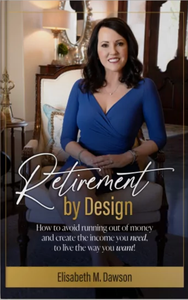
Recommended Reading: Retirement By Design
Preparing for retirement involves more than saving money. It’s also about understanding how taxes, income decisions, inflation, and other financial risks may affect the future you’ve worked hard to create.
In my book, Retirement By Design: How to Avoid Running Out of Money and Create the Income You Need, To Live the Way You Want!, I explore the importance of developing a coordinated retirement income strategy and recognizing financial decisions that can affect your long-term goals.
My goal is to help you think more intentionally about how your wealth can support the life you want to live.
Explore Retirement By Design and Get Your Copy
My Perspective: A Roth Conversion Should Support Your Retirement Plan, Not Drive It
Throughout my career, I’ve believed financial planning should help people create a life by design, not by default.
That philosophy applies to Roth conversions.
I don’t believe financial decisions should be made simply because a particular strategy is popular or because someone else had success with it.
Your financial situation is unique.
Your income, investments, taxes, family responsibilities, and retirement goals all deserve consideration.
For some individuals, evaluating a Roth conversion before retirement may uncover meaningful planning opportunities.
For others, maintaining a combination of traditional retirement accounts and Roth assets may be more appropriate.
And for some, converting additional assets may not be beneficial at all.
The goal isn’t to convert as much money as possible. It’s to understand whether paying taxes today could support a more effective retirement income strategy for your circumstances.
Let’s Talk About Your Retirement Income Strategy
Are you approaching retirement with substantial savings in a traditional 401(k) or IRA?
Have you wondered whether a Roth conversion could affect your future taxes, required minimum distributions, or Medicare premiums?
Or are you simply looking for a more coordinated approach to retirement income planning?
I’d welcome the opportunity to learn more about your goals.
As a financial advisor in San Diego with more than 28 years of experience, I help individuals, families, and business owners evaluate retirement income, investment considerations, and tax-aware financial planning strategies.
Together with your other qualified professionals, we can explore how these decisions fit into your larger financial picture.
Schedule Your Wealth Discovery Call
Call: (619) 640-2622
Serving: San Diego, La Jolla, Del Mar, Rancho Santa Fe, Encinitas, Carlsbad, Poway, Coronado, and surrounding communities.
Frequently Asked Questions About Roth Conversions Before Retirement
Is a Roth conversion worth considering before retirement?
It may be worth evaluating if your income is expected to change, you have significant tax-deferred savings, or you want to explore ways to manage future taxable retirement withdrawals. The decision depends on current and expected future taxes, other financial consequences, and long-term goals.
What is the best age to do a Roth conversion?
There is no universally best age. Some individuals evaluate conversions during years when taxable income is temporarily lower, including the period after leaving work but before receiving certain retirement income sources. Other circumstances may support a different approach.
Do I have to pay taxes when I convert a traditional IRA to a Roth IRA?
Generally, the portion of the conversion that represents previously untaxed retirement funds is included in taxable income for the year of conversion. Any applicable after-tax basis may affect the taxable amount.
Can I convert my entire traditional IRA into a Roth IRA?
Under current law, there is generally no annual dollar limit on eligible Roth conversions. However, converting a large balance in one year may create substantial taxes and other financial consequences. Eligibility, account rules, and individual circumstances matter.
Can a Roth conversion reduce future required minimum distributions?
Potentially. Converting eligible funds reduces the amount remaining in the traditional account, all else being equal, which may reduce future RMD calculations. The conversion itself may create current taxes, so both sides of the decision should be evaluated.
Will a Roth conversion affect Medicare premiums?
It can. Taxable conversions increase income and may affect Medicare Part B and Part D income-related premium adjustments. Social Security generally uses income information from two years earlier to determine these adjustments.
Can I undo a Roth conversion if I change my mind?
Roth conversions made in 2018 or later generally cannot be recharacterized back into a traditional IRA. This makes it especially important to understand the tax consequences before completing a conversion.
Can I do a Roth conversion after RMDs begin?
You may still be able to convert eligible funds after RMDs begin, but the amount required to be distributed for the year cannot itself be converted. Applicable RMD requirements must be satisfied first.
Is a Roth conversion the same as contributing to a Roth IRA?
No. A regular Roth IRA contribution involves contributing eligible funds subject to annual contribution and income eligibility rules. A Roth conversion involves moving eligible retirement assets from a traditional or other qualifying account into a Roth IRA, generally with applicable tax consequences.
This article is provided for general educational purposes and does not constitute individualized investment, tax, legal, or financial advice. Roth conversion rules, tax laws, Medicare premiums, retirement plan provisions, and individual circumstances may change. Consult qualified financial and tax professionals before making retirement account decisions.
Investment advice offered through Copia Wealth Management Advisors, Inc., a registered investment adviser.