You have spent decades saving for retirement, contributing to your 401(k), building your IRA, and making financial decisions designed to support your future.
But what happens when the IRS requires you to start withdrawing money from those retirement accounts—even if you don’t need it?
These withdrawals are called required minimum distributions, or RMDs. And while they may seem like a routine part of retirement, they can create financial consequences that many retirees don’t anticipate.
RMDs can affect your taxable income, the amount of Social Security benefits subject to federal income tax, and even what you pay for Medicare.
As a financial advisor in San Diego with more than 28 years of experience, I’ve seen how important it is to understand the relationship between retirement withdrawals, taxes, and long-term income planning.
The goal isn’t simply to follow IRS rules. It’s to understand how those rules fit into your financial strategy.
Let’s explore what required minimum distributions mean for your retirement and how thoughtful planning can help you prepare.
Quick Answer: How Do Required Minimum Distributions Affect Your Retirement?
Required minimum distributions are mandatory withdrawals from certain retirement accounts, including traditional IRAs and many employer-sponsored retirement plans.
Under current IRS rules, most people born between 1951 and 1959 must begin RMDs at age 73, while those born in 1960 or later generally begin at age 75.
RMDs can affect retirement finances in several ways:
- Higher taxable income: Withdrawals from traditional retirement accounts are generally included in taxable income.
- Potentially higher Medicare premiums: Additional income may trigger Medicare’s Income-Related Monthly Adjustment Amount, known as IRMAA.
- Social Security taxation: Retirement withdrawals can increase the portion of Social Security benefits subject to federal income tax.
- Retirement income decisions: Mandatory withdrawals may change how much you take from other financial accounts.
- Long-term tax planning: Anticipating RMDs can help you evaluate potential tax consequences before they begin.
The amount you must withdraw depends on your account balances, age, and applicable IRS calculation rules.
Understanding these requirements before reaching RMD age may give you more time to evaluate your retirement income strategy.
What Are Required Minimum Distributions?
Required minimum distributions are withdrawals the IRS generally requires from certain tax-deferred retirement accounts once you reach the applicable age.
When you contribute to a traditional IRA or certain employer-sponsored retirement accounts, taxes on some or all of that money may be deferred until it is withdrawn.
RMD rules are designed to ensure that funds in these accounts eventually become subject to the applicable distribution and taxation rules.
Accounts commonly subject to RMD requirements include:
- Traditional IRAs
- Traditional 401(k) accounts
- SEP IRAs
- SIMPLE IRAs
- Traditional 403(b) accounts
- Certain other employer-sponsored retirement plans
Different rules may apply to inherited retirement accounts.
One important distinction is that Roth IRAs and designated Roth accounts in employer retirement plans generally do not require distributions during the original account owner’s lifetime.
Understanding which accounts require distributions is one of the first steps toward effective retirement income planning.
For official guidance, visit the IRS Required Minimum Distributions resource.
At What Age Do Required Minimum Distributions Begin?
One reason RMD planning can be confusing is that the starting age has changed over time.
Under the SECURE 2.0 Act, the applicable starting age depends on your birth year.
| Birth year | Generally applicable RMD starting age |
| 1950 or earlier | Earlier rules generally apply |
| 1951–1959 | 73 |
| 1960 or later | 75 |
Traditional IRA owners generally must take their first RMD for the year they reach their applicable starting age.
However, the first withdrawal may be delayed until April 1 of the following year.
That delay comes with an important consideration: you could end up taking two required distributions during the same calendar year.
Employer-sponsored plans may have different timing rules. Some participants who are still working can delay RMDs from their current employer’s plan, depending on plan provisions and ownership status.
My recommendation is to begin thinking about RMDs several years before they become mandatory.
Waiting until your first distribution deadline may limit opportunities to coordinate withdrawals with other retirement decisions.
How Are Required Minimum Distributions Calculated?
Your required minimum distribution generally depends on two factors:
- Your applicable retirement account balance on December 31 of the previous year.
- The IRS life expectancy factor that applies to your situation.
The basic calculation is:
Prior Year-End Account Balance ÷ IRS Distribution Factor = Required Minimum Distribution
Example: A Retiree With an $795,000 Traditional IRA
Let’s imagine a 73-year-old retiree has a traditional IRA valued at $795,000 on December 31 of the previous year.
For a typical IRA owner using the IRS Uniform Lifetime Table, the distribution factor at age 73 is 26.5.
That calculation would look like this:
$795,000 ÷ 26.5 = $30,000
In this simplified example, the retiree would generally need to withdraw at least $30,000 during the applicable year.
That does not necessarily mean the retiree needs $30,000 in additional spending money.
It means the distribution requirement must be satisfied.
And if the amount is withdrawn from a fully taxable traditional IRA, the distribution generally becomes part of that year’s taxable income.
The calculation can differ based on account type, beneficiary circumstances, and other applicable rules.
How RMDs Can Increase Your Taxes in Retirement
One of the biggest misconceptions I encounter is that taxes will automatically decrease once someone stops working.
That may happen for some retirees, but it isn’t guaranteed.
Depending on your retirement income sources, taxes can remain significant well into retirement.
Imagine you receive income from:
- Social Security
- A pension
- Portfolio dividends and interest
- Rental properties
- Retirement account withdrawals
Now add a required minimum distribution.
That additional taxable income could move part of your income into a higher federal tax bracket or affect certain deductions and other tax-related calculations.
Why the Timing of Withdrawals Matters
For many retirees, the amount withdrawn from an IRA is only one part of the decision.
The timing also matters.
Taking a large distribution in a year when you already have substantial taxable income could create a different outcome than receiving withdrawals over several years.
That’s why coordinating retirement accounts, pensions, portfolio assets, and other income sources can be important.
For a closer look at account withdrawal decisions, read my article: What Is the Best Order for Withdrawing Retirement Accounts?
The objective isn’t to avoid required distributions. It’s to understand how those distributions may affect your overall financial picture.
Can Required Minimum Distributions Increase Your Medicare Premiums?
Yes. This is one of the more overlooked consequences of retirement income planning.
Medicare premiums are not necessarily the same for every retiree.
Some individuals pay additional premiums based on income through a program called the Income-Related Monthly Adjustment Amount, or IRMAA.
IRMAA can increase Medicare Part B and Part D costs for people whose modified adjusted gross income exceeds certain thresholds.
And because taxable RMDs can increase income, they may contribute to higher Medicare premiums.
How Medicare IRMAA Works
For IRMAA purposes, modified adjusted gross income generally includes adjusted gross income plus tax-exempt interest.
Social Security normally uses tax information from two years earlier to determine your Medicare income-related premium adjustment.
For example:
Your 2024 income generally determines your 2026 Medicare IRMAA calculation.
This creates an important planning consideration.
A large retirement distribution today may affect Medicare premiums two years later.
Medicare IRMAA Thresholds for 2026
For 2026, the following income thresholds apply to people filing individually or married couples filing jointly:
| 2024 modified adjusted gross income | Individual filer | Married filing jointly |
| Standard Part B premium tier | $109,000 or less | $218,000 or less |
| First higher-income tier | Above $109,000 to $137,000 | Above $218,000 to $274,000 |
| Second higher-income tier | Above $137,000 to $171,000 | Above $274,000 to $342,000 |
| Third higher-income tier | Above $171,000 to $205,000 | Above $342,000 to $410,000 |
Additional tiers apply at higher income levels, and married individuals filing separately have different thresholds.
The standard Medicare Part B premium for 2026 is $202.90 per month.
Individuals in the first higher-income tier pay $284.10 per month for Part B, plus any applicable Part D income-related adjustment.
You can review the complete current thresholds through the Social Security Administration’s Medicare premium information.
These numbers are specific to 2026 and may change in future years.
Why RMD Planning and Medicare Planning Should Work Together
Imagine a retiree whose income is relatively close to an IRMAA threshold.
A required withdrawal could push their income above that threshold.
Even if the distribution isn’t needed for living expenses, it may create additional tax and Medicare considerations.
That doesn’t mean someone should avoid necessary withdrawals or make financial decisions based solely on Medicare premium brackets.
It means those premiums belong in the larger retirement planning conversation.
When evaluating retirement income, I believe it’s important to consider how much you keep after taxes and other related expenses—not just the amount withdrawn from your accounts.
How Required Minimum Distributions Affect Social Security Taxes
RMDs can also affect the federal income tax treatment of Social Security benefits.
Not all Social Security benefits are necessarily taxable.
The portion subject to federal income tax depends on your combined income and filing status.
Combined income generally includes adjusted gross income, tax-exempt interest, and half of your Social Security benefits.
Because taxable IRA distributions can increase adjusted gross income, RMDs may cause a larger portion of your Social Security benefits to become taxable.
Depending on income, up to 85% of Social Security benefits may be included in federal taxable income.
That does not mean Social Security is taxed at an 85% tax rate.
It means up to 85% of the benefits may become part of the income used to calculate your federal income tax.
This is an important distinction.
For retirees receiving Social Security, pensions, and retirement account distributions, understanding how these income sources interact can help prevent surprises at tax time.

Five Retirement Planning Strategies to Consider Before RMDs Begin
There is no one-size-fits-all strategy for managing required minimum distributions.
However, several planning considerations may be worth discussing with your financial advisor and tax professional.
1. Review Your Future RMD Exposure Early
If you are approaching retirement, review the approximate balances in your tax-deferred retirement accounts.
Consider how those balances might change over time and what mandatory withdrawals could look like once RMD rules apply.
This can help identify whether future distributions might create tax or Medicare premium concerns.
2. Evaluate Roth Conversion Opportunities
A Roth conversion generally involves moving eligible funds from a traditional retirement account into a Roth account.
The amount converted is generally taxable in the year of conversion, except for any applicable after-tax basis.
Because Roth IRAs generally do not require lifetime RMDs for the original owner, converting eligible amounts may help some individuals manage future required distributions.
However, conversions can also increase current taxable income and may affect future Medicare premiums.
One important rule: An amount required to be distributed as an RMD cannot itself be converted to a Roth IRA.
A conversion should be evaluated carefully, particularly when taxes, retirement income, estate goals, and Medicare are involved.
3. Coordinate Retirement Withdrawals With Your CPA
Retirement income planning and tax planning should work together.
Your CPA can help evaluate how retirement distributions interact with taxable income, Social Security, portfolio gains, and other tax considerations.
For some retirees, managing withdrawals over multiple years may create more flexibility than waiting until RMDs become mandatory.
This is one reason I believe long-term financial planning should involve coordination among the professionals helping guide your financial decisions.
4. Consider Qualified Charitable Distributions
For individuals who are charitably inclined, qualified charitable distributions, or QCDs, may offer another planning opportunity.
Under applicable IRS rules, eligible individuals age 70½ or older may be able to direct qualifying distributions from an IRA to an eligible charitable organization.
A properly executed QCD may satisfy all or part of an IRA’s required minimum distribution while excluding the qualifying amount from taxable income, subject to applicable rules and annual limits.
This can be particularly meaningful for retirees who already plan to support charitable organizations.
QCDs must meet specific requirements, and not all retirement accounts or distributions qualify.
Discuss the details with your financial and tax professionals before taking action.
5. Develop a Retirement Income Plan Before Your First Mandatory Withdrawal
This is perhaps my most important recommendation.
A coordinated retirement income plan considers more than the IRS requirement to withdraw money.
It evaluates:
- How much income you need for your lifestyle
- Which retirement accounts should provide that income
- How portfolio performance could affect withdrawals
- What taxes may be due
- How Medicare premiums may change
- How Social Security fits into the overall strategy
- How long your assets may need to support you
- What you hope to leave to your family or beneficiaries
Through my Retirement Income Planning Services in San Diego, I help individuals and families evaluate these financial considerations as part of a personalized retirement strategy.
The objective is to make decisions intentionally rather than simply reacting when a required distribution notice arrives.
Should You Delay Your First Required Minimum Distribution?
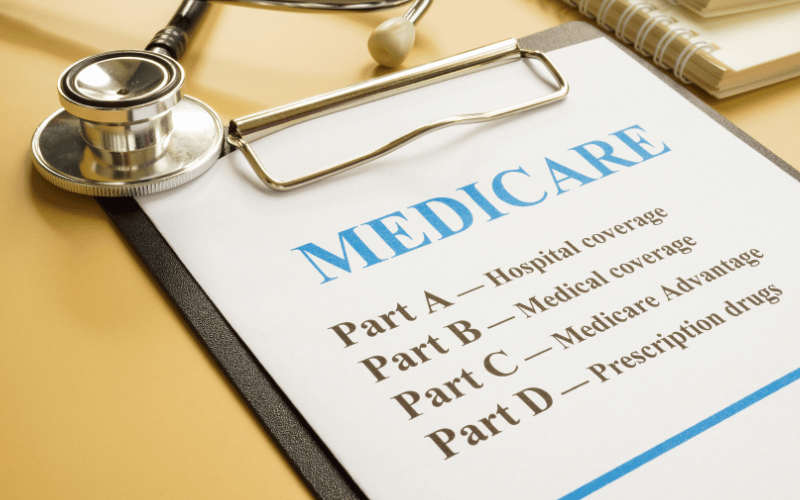
Some people can delay their first RMD until April 1 of the year following the year they reach their applicable starting age.
At first glance, that may sound appealing.
But there is a tradeoff.
If you delay your first RMD, you generally must also take your second RMD by December 31 of that same following year.
That means two required distributions could occur in one tax year.
For some retirees, that could increase taxable income and potentially affect later Medicare premiums.
For others, delaying the first withdrawal may fit their circumstances.
The decision should be based on your complete financial situation rather than simply choosing the latest permissible deadline.
What Happens if You Miss a Required Minimum Distribution?
Failing to take the full required distribution can create an additional tax.
Under current IRS rules, the excise tax generally equals 25% of the RMD shortfall.
If the shortfall is corrected within the applicable correction window, the rate may be reduced to 10%.
A waiver may also be available in certain circumstances when reasonable error and corrective action requirements are met.
Missing an RMD should be addressed promptly with a qualified tax professional.
You can learn more through IRS Publication 590-B.
This is another reason to maintain accurate records and understand the distribution requirements for each retirement account.
If you have multiple traditional IRAs, the IRS generally allows you to calculate each IRA’s RMD separately and withdraw the combined required amount from one or more of those IRAs.
However, employer-sponsored retirement plans generally have separate distribution requirements.
Knowing these distinctions can help avoid administrative mistakes.
Continue Learning With Retirement By Design

Taxes can take a significant bite out of your retirement income, especially when withdrawals from retirement accounts aren’t part of a coordinated financial strategy.
In my book, Retirement By Design, I explore the financial decisions that can affect your retirement, including income planning, inflation, unnecessary expenses, and costly tax mistakes. My goal is to help you better understand how to turn the wealth you’ve accumulated into income that supports the retirement lifestyle you want.
Discover Retirement By Design →
How Required Minimum Distributions Fit Into Wealth Management
Retirement isn’t simply about accumulating the largest possible overall portfolio.
It’s about understanding how those assets will eventually support your financial goals.
I often encourage people approaching retirement to shift their focus from accumulation alone to the question of how their income sources, portfolio assets, and financial responsibilities will work together.
Required minimum distributions are one piece of that larger picture.
For example, a decision to convert retirement assets to a Roth IRA may affect your taxes today and future withdrawal requirements.
A decision to take a larger retirement distribution could affect the amount of assets remaining invested.
A change in your income could influence future Medicare costs.
And decisions about portfolio allocation could affect how comfortably you meet required distributions during market volatility.
These decisions are interconnected.
A personalized plan can help you evaluate tradeoffs before making changes that may have lasting consequences.
Planning for RMDs in San Diego
For individuals and families living in San Diego, retirement planning often involves additional financial priorities.
Some retirees own valuable real estate alongside retirement accounts. Others have additional portfolios, business interests, pension benefits, or multiple retirement accounts from different employers.
California income taxes may also affect the amount of retirement income available after taxes.
Coordinating these financial resources becomes especially important when required minimum distributions begin.
For more than 28 years, I’ve helped individuals, families, business owners, and retirees throughout San Diego County think more intentionally about their financial futures.
My approach is centered around understanding your complete financial picture and developing strategies that reflect your retirement goals, income needs, and long-term priorities.
Whether you’re retiring in five years, approaching your first RMD, or already taking required distributions, it’s worth reviewing how those withdrawals fit into your overall financial plan.
My Perspective: Retirement Income Should Be Planned, Not Left to Chance
One of the most important lessons I’ve learned throughout my career is that earning, saving, and investing are only parts of financial planning.
Eventually, the question becomes how to use the wealth you’ve accumulated.
Required minimum distributions make that transition especially important.
The IRS may determine a minimum amount you must withdraw, but that doesn’t determine the retirement lifestyle you want or the financial strategy that is right for you.
Those decisions deserve a broader conversation.
A thoughtful retirement plan should coordinate mandatory withdrawals with taxes, Medicare, Social Security, portfolio decisions, and your long-term financial goals.
The earlier you begin understanding these relationships, the more opportunities you may have to prepare.
Let’s Talk About Your Retirement Income Strategy
Are you approaching the age when required minimum distributions begin?
Have you wondered whether future retirement withdrawals could affect your taxes or Medicare premiums?
Or are you already retired and looking for a more coordinated financial strategy?
I invite you to start a conversation.
As a financial advisor in San Diego with more than 28 years of experience, I help individuals and families evaluate retirement income, portfolio assets, tax-aware strategies, and long-term financial decisions.
My goal is to help you understand your options and develop a personalized plan that reflects the life you want to create.
Schedule Your Wealth Discovery Call
Call: (619) 640-2622
Serving: San Diego, La Jolla, Del Mar, Rancho Santa Fe, Encinitas, Carlsbad, Poway, Coronado, and surrounding communities.
Frequently Asked Questions About Required Minimum Distributions
At what age do required minimum distributions start in 2026?
Most individuals born between 1951 and 1959 generally begin RMDs at age 73. Those born in 1960 or later generally begin at age 75. Earlier birth years are subject to previous rules, and certain employer-sponsored retirement plans have special timing provisions.
Do required minimum distributions count as taxable income?
Withdrawals from traditional retirement accounts are generally taxable, except for amounts representing eligible after-tax basis or other nontaxable portions. The tax treatment depends on the account and the individual’s circumstances.
Can RMDs increase my Medicare premiums?
Yes. Taxable RMDs may increase modified adjusted gross income and could contribute to higher Medicare Part B and Part D premiums through IRMAA. Medicare generally uses income information from two years earlier.
Can I avoid RMDs by moving my money into a Roth IRA?
Roth conversions can affect future RMD exposure, but they generally create taxable income when made. The RMD itself cannot be converted, and conversions must comply with IRS rules. Whether a conversion is appropriate depends on your individual financial and tax circumstances.
Can I take more than my required minimum distribution?
Yes. You can generally withdraw more than the required minimum. However, larger withdrawals may increase taxable income and affect other financial considerations. An excess distribution in one year generally cannot be used to satisfy a future year’s RMD.
Do I have to take an RMD from every traditional IRA?
You generally calculate the required minimum distribution separately for each traditional IRA, but you may be able to satisfy the combined total through withdrawals from one or more of those IRAs. Different rules apply to employer-sponsored plans and inherited accounts.
Can charitable donations help satisfy an RMD?
Eligible qualified charitable distributions made directly from certain IRAs to qualifying charities may count toward an RMD. The account owner must meet applicable age and other requirements.
What should I do if my Medicare premiums increased after retirement?
If you experienced an eligible life-changing event, such as stopping or reducing work, and your household income decreased, you may be able to request a new Medicare IRMAA determination through Social Security using Form SSA-44. Approval depends on the circumstances.